
Community Ambassador Program: Building Member-Led Groups

Start here: How to Create a Subreddit for Your Business: Find the Gap
TL;DR
- A community ambassador program identifies members who already answer questions well and gives them a formal role, rather than creating engagement from nothing.
- The strongest candidates show a pattern of unpaid, accurate help over time, not a single good post.
- Selection criteria should rely on observable activity, such as repeated helpful replies and consistency across topics, not popularity or follower counts.
- Clear scope and disclosure rules protect trust; ambassadors should state their role when speaking on behalf of a brand or organization.
- The practical next step is to track who already acts like an ambassador before building a program around them.

Most online communities already have people who act as de facto community ambassadors long before any formal program exists. A community ambassador program works best when it recognizes behavior that is already happening, such as a member who consistently answers newcomer questions, rather than trying to manufacture enthusiasm through titles or perks. This distinction matters because programs built around existing habits tend to hold up, while programs built around incentives often fade once the incentive stops.
The organizations referenced in available research, including Cisco's Community Ambassador Program and Howard County's Community Ambassador Program, share a common thread: ambassadors are chosen for consistent, observable contribution, not for enthusiasm alone. This pattern holds across very different settings, from technical learning platforms to local government outreach.
The sections that follow break down how to spot ambassador behavior before naming anyone, what selection criteria hold up under scrutiny, and how to keep a program from turning into unpaid staffing.
How Ambassadors Connect and Serve Their Communities
Ambassadors link residents to resources, gather input on local concerns, and show up where people already spend time, including events built around shared hobbies like Pokémon GO.
Core Responsibilities and Community Outreach
Community ambassadors act as a bridge between residents and the organizations that serve them. Their daily work covers several tasks:
- Information sharing: explaining available programs, services, or public health resources
- Listening: collecting concerns and feedback from residents during conversations and events
- Event support: helping organize or staff gatherings that bring neighbors together
- Referrals: connecting people to services like healthcare, housing help, or safety programs
- Advocacy: passing community concerns back to the organizations they represent
These community ambassadors serve as a voice for their neighborhoods, making sure organizations hear what residents actually need.
Effective community outreach starts with listening rather than talking. Ambassadors pay close attention to concerns before offering solutions.
Finding Needs That Existing Groups Do Not Meet
Ambassador programs often start because a gap exists. Existing organizations may serve part of a community but miss certain groups or issues.
| Signal | What It Means | Action for Ambassadors |
|---|---|---|
| Repeated questions about the same service | Information is not reaching residents | Share clear, simple guidance directly |
| Low turnout at official meetings | Trust or access barriers exist | Meet people in familiar, informal settings |
| Complaints with no clear response path | No one owns the issue | Route feedback to the right department or group |
| Non-English speakers underserved | Language gap in current outreach | Pair ambassadors with language skills to those residents |
This kind of gap-finding supports civic engagement by letting community members, not just professional planners, guide where attention is needed.
Where the Model Operates: Public Agencies, Nonprofits, and Pokémon GO
Ambassador programs show up in many settings, each with a different focus.
| Setting | Primary Focus | Example of Ambassador Role |
|---|---|---|
| Public health agencies | Connecting residents to care and prevention programs | Explaining vaccine clinics or screening events |
| City planning offices | Gathering input on development projects | Collecting resident feedback at open houses |
| Nonprofits | Supporting program goals with trusted local voices | Running peer education sessions |
| Hobby-based groups, such as Pokémon GO communities | Organizing players around shared interests | Coordinating meetups, raids, or local events |
Community organizations of all kinds use trained liaisons to build trust between residents and the groups that serve them.
Even games built around real-world movement, like Pokémon GO, rely on local leaders who organize players, share tips, and build turnout for events. The same ambassador model used in public health or city planning applies here: a trusted person connects others to shared activities and keeps the group active.
Designing a Program Members Can Help Lead
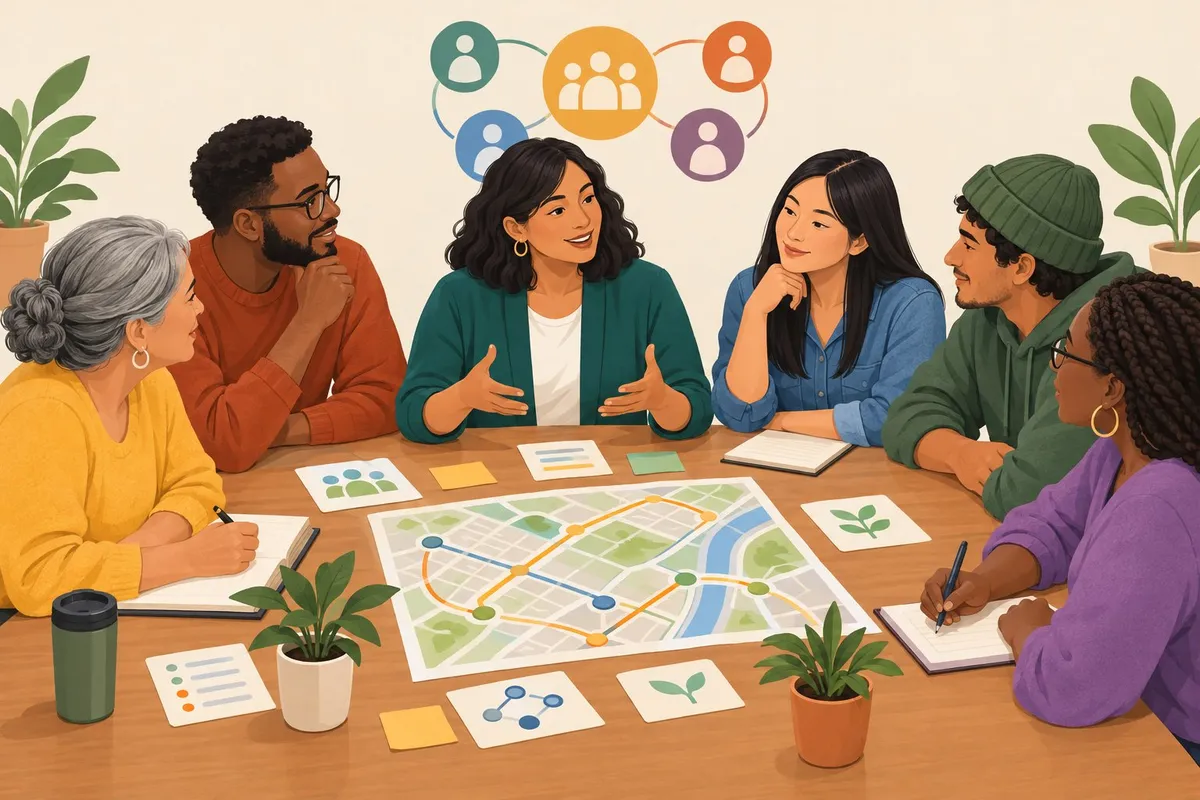
A strong community ambassador program sets clear rules for who can join, how people get trained, and how the program grows over time. The sections below cover recruitment, training, events, and tracking results so members can help guide the program's direction.
Recruitment, Eligibility, and Local Representation
A program should recruit ambassadors who already live in or have close ties to the community it serves. This builds trust faster than hiring outsiders.
Eligibility rules should be simple and written down. Common requirements include:
- Residency: Lives in the target neighborhood or service area
- Language skills: Speaks a language common in the community, such as Spanish or another local language
- Availability: Can commit to a set number of hours per month
- Communication skills: Comfortable talking with neighbors and sharing information
- No major barriers: Passes any required background checks
Programs should also track who they recruit to make sure ambassadors reflect the community's makeup. If a neighborhood is half Spanish-speaking households, the ambassador team should include Spanish speakers in a similar share. The Camden Coalition's ambassador toolkit notes that programs work best when they draw on people who already understand the community's needs and assets firsthand.
Training, Support, and Professional Development
Training should start before an ambassador's first community interaction, not after. New ambassadors need to learn the program's goals, key talking points, and how to answer common questions.
A basic training plan might include:
- Orientation: Ambassadors learn the program's mission and rules.
- Topic training: Ambassadors study the specific health or service topics they will discuss, such as vaccines or benefit enrollment.
- Practice sessions: Ambassadors role-play conversations with trainers before going into the field.
- Ongoing check-ins: Staff meet with ambassadors regularly to answer questions and update them on new information.
- Skill-building: Ambassadors get access to professional development, such as public speaking or data collection training.
This structure gives ambassadors real support instead of leaving them to figure things out alone. Paid roles also matter here. Trusted messengers programs pay ambassadors for their time, which signals that the work has value and keeps people engaged longer.
Community Events, English and Spanish Access, and Safety
Ambassadors often meet residents face-to-face at local events. These might include health fairs, school programs, or small gatherings in parks or community centers.
Materials and messaging should be available in both English and Spanish, or any other language common in the service area. A flyer or script that only exists in English leaves out people who need the information most.
Safety planning should cover a few basics:
| Safety Factor | What to Check |
|---|---|
| Event location | Well-lit, accessible, and familiar to residents |
| Staff backup | A supervisor or partner on call during events |
| Weather or crowd issues | A plan to pause or move indoors if needed |
| Medical concerns | First aid access if the event involves health screenings |
Programs that mix local culture into events tend to see better turnout. One greenway ambassador program held a crawfish boil to teach residents about green infrastructure, which tied the event to something people already enjoyed.
Measuring Participation and Planning for Sustainability
A program needs simple numbers to show whether it's working and whether it can keep running.
Useful measures include:
- Number of ambassadors active each month
- Number of residents reached through events or conversations
- Number of referrals made to services, such as Medicaid enrollment or housing help
- Feedback collected from residents and passed back to program staff
- Ambassador retention rate over six or twelve months
Sustainability planning means looking past the first year of funding. Programs should ask where future money will come from, whether a health department, hospital system, or local grant. They should also build in time for ambassadors to train newer members, so the program doesn't collapse if a few people leave. A program that tracks these numbers consistently can show funders and city leaders clear proof that the work is reaching people and solving real problems.
Frequently asked questions
How do I apply to become a Pokémon GO Community Ambassador?
Applying starts with running an active, in-person Pokémon GO group before submitting any paperwork.
- Build a track record of organizing local, in-person Pokémon GO meetups or events.
- Check the official Community Ambassador FAQ page for the current application window, since the program does not accept applications year-round.
- Submit the application with details about the group's size, activity history, and event frequency.
- Wait for a review from the Pokémon GO team, which checks for consistent community leadership.
- Once accepted, the applicant now has official Community Ambassador status and access to program perks.
Niantic reviews applications in batches rather than approving them instantly, so timing the submission to an open window matters.
Who is eligible to become a Pokémon GO Community Ambassador?
Eligibility centers on already leading a real, active Pokémon GO community rather than simply being a dedicated player.
| Requirement | What It Means | How to Check It |
|---|---|---|
| Active local group | Organizes in-person meetups on a regular basis | Review past event dates and attendance |
| Leadership history | Has run the group for a sustained period, not just started it | Look at how long the group has existed |
| Good standing | Follows Pokémon GO's terms of service and community guidelines | Confirm no account bans or violations |
| Communication channel | Has a way to reach members, such as a chat group or social page | Check if the group has an active member list |
A single player who attends events but does not organize them typically does not qualify; the role is built for organizers, not just attendees.
What are the responsibilities of a Community Ambassador?
A Community Ambassador's main job is keeping their local Pokémon GO group active, informed, and connected to Niantic.
- Event organizing: Plans and runs regular in-person meetups for local players.
- Communication: Shares game updates, event details, and announcements with the group.
- Feedback delivery: Passes along community feedback to Niantic through designated channels, as noted in the Community Ambassador FAQ.
- Conflict handling: Manages minor disputes or issues that come up during meetups.
- Growth support: Helps new players feel welcome and get connected to the group.
Ambassadors are not expected to run large regional events on their own; the role focuses on steady, local-level organizing.
Do Community Ambassadors get paid?
No, Pokémon GO Community Ambassadors are not paid positions.
This differs from some other ambassador programs. For example, the Fresh Approach Community Ambassador Program offers part-time, paid roles tied to local health initiatives. Pokémon GO's version works differently, since it rewards ambassadors with in-game perks and support items instead of money.
| Program Type | Compensation Structure |
|---|---|
| Pokémon GO Community Ambassador | Perks and item codes, no cash payment |
| Fresh Approach Community Ambassador | Part-time paid position |
| DHCS Coverage Ambassador | Volunteer-based, focused on sharing health information |
Ambassadors who expect a paycheck will not find one here; the value comes from game-related rewards and closer access to the development team.
What rewards are available through Pokémon GO Community Ambassador events?
Rewards focus on tools that help ambassadors run better events and build excitement in their group.
- Item codes: Redeemable codes for in-game items to share with the community.
- Event swag: Physical giveaway items for meetups.
- Direct feedback access: Scheduled sessions with Niantic representatives to discuss what's working and what needs改善.
- Growth resources: Support materials designed to help the local group expand.
According to the Community Ambassador page on Pokémon GO's site, these perks are meant to support the group's growth rather than reward the ambassador individually.
How can I find a Pokémon GO Community Ambassador or local meetup?
The fastest way is through Pokémon GO's official community finder tool.
- Visit the Pokémon GO community page.
- Enter a city or region to search for nearby groups.
- Review the list of local ambassadors and their group details.
- Join the group's communication channel, such as a chat app or social media page.
- Attend an upcoming meetup to connect with the ambassador and other players in person.
Players can also check community-run spaces like the r/TheSilphRoad subreddit, where ambassadors and players discuss program details and share updates that may not appear on the official site right away.