
Community Co-Creation: From Consultation to Shared Power

Start here: How to Create a Subreddit for Your Business: Find the Gap
TL;DR
- Community co-creation means members help shape decisions, content, or projects, not just consume what a brand or group posts.
- The core insight is that passionate customers already discuss, compare, and troubleshoot in existing communities before a brand ever shows up, so co-creation works best when it builds on those existing conversations instead of replacing them.
- The method starts with finding a gap in current discussions, then inviting the people already active there to help fill it with real input.
- Useful co-creation shows up as members answering questions well, starting their own threads, or improving shared resources without being asked.
- The next step is to watch for that kind of member-led activity and support it, rather than controlling every post or discussion.
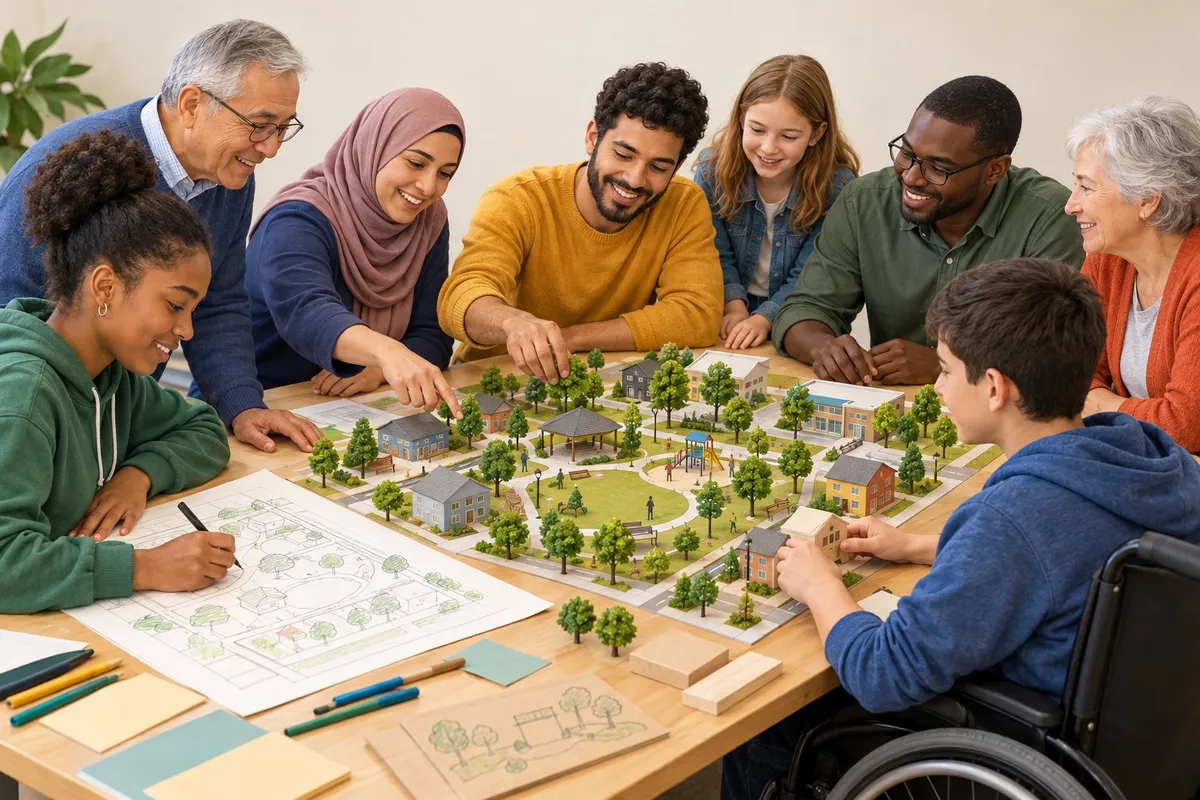
Community co-creation is a working method, not a slogan. It describes what happens when an organization stops producing content at a community and starts building it with that community instead. Community co-creation involves members directly in shaping content, decisions, or projects that affect the group they belong to.
The approach matters most in spaces where people already gather around a shared interest, problem, or trade. These groups often have members who answer questions better than any official source, compare products with more detail than a company ever could, and flag gaps before anyone else notices them. Recognizing that activity is the starting point for real co-creation.
This guide breaks down how to spot those signals, when to step back, and how to support member-led contributions without taking over the conversation.
What Changes When Communities Help Make Decisions
When residents move from giving opinions to making real decisions, projects shift in several ways. Power gets distributed differently, more types of knowledge get used, and solutions tend to fit local needs more closely.
How Co-Creation Differs From Consultation and Feedback
Consultation asks people what they think. Co-creation asks people to help decide and build.
| Approach | Who decides | When input happens | Who holds power |
|---|---|---|---|
| Consultation | Officials or planners | After the plan is drafted | Mostly with institutions |
| Feedback collection | Officials or planners | During or after a project | Mostly with institutions |
| Co-creation | Residents and officials together | From the start, through completion | Shared between both groups |
Consultation often happens late. By the time residents are asked for feedback, the main choices have already been made. Co-creation brings residents in at the design stage, not just the review stage.
This changes the kind of collaboration involved. Instead of reacting to a finished plan, community members help shape the goals, the budget priorities, and the final outcome.
Who Participates and Whose Knowledge Counts
Co-creation widens the group of people whose knowledge shapes a project. It also changes which kinds of knowledge get treated as valid.
Who typically participates:
- Residents who live with the daily effects of a decision
- Local business owners affected by changes
- Community organizers with existing trust in the area
- Technical experts and planners
- Local government staff
Whose knowledge counts:
- Lived experience from residents is treated as equally valid to technical expertise, since community partners are seen as knowledge holders who provide essential context and cultural understanding.
- Long-time residents often know which solutions failed before and why.
- People directly affected by a problem usually understand its daily impact better than outside experts.
This shift matters for stakeholder engagement. Projects that only consult experts miss details that residents notice first, such as a crosswalk that floods every spring or a park bench nobody uses because it faces the wrong direction.
How to Share Decision-Making Authority and Ownership
Sharing authority requires specific structures, not just good intentions.
Steps to share decision-making power:
- Create a steering committee that includes both residents and officials.
- Define clear roles so everyone knows who votes, who advises, and who implements.
- Use consensus-based methods instead of a single final decision-maker, which helps ensure decision-making is more balanced and outcomes are supported by those affected.
- Hold regular meetings where every partner has a chance to speak.
- Document decisions and share them publicly so the process stays transparent.
This process builds shared ownership. When residents help choose a design or set a budget, they are more likely to see the result as theirs, not something done to them.
Community ownership also changes long-term maintenance. People tend to protect and care for spaces or programs they helped create.
Power dynamics shift when:
- Residents hold formal votes, not just advisory roles
- Budget decisions include community representatives
- Project timelines can change based on community input, not just funder deadlines
Why Collective Intelligence Can Improve Local Solutions
Collective intelligence means combining many types of knowledge to solve a problem better than one group could alone.
What local solutions gain from this approach:
- Practical fit: Residents catch design flaws that outside planners might miss.
- Faster trust-building: Active participation early reduces resistance later, since people were part of the decision.
- Stronger social capital: Working together on a shared project builds relationships between neighbors and local institutions.
- Better use of existing resources: Local organizers often already have networks and trust that outside teams would take years to build.
A step-wise co-creation process helps teams choose the right tools based on project goals and available resources, rather than applying one method to every situation.
Community engagement built this way does not just collect opinions. It combines technical expertise with daily, lived knowledge to produce solutions that work for the people who will actually use them.
How to Put Shared Decision-Making Into Practice
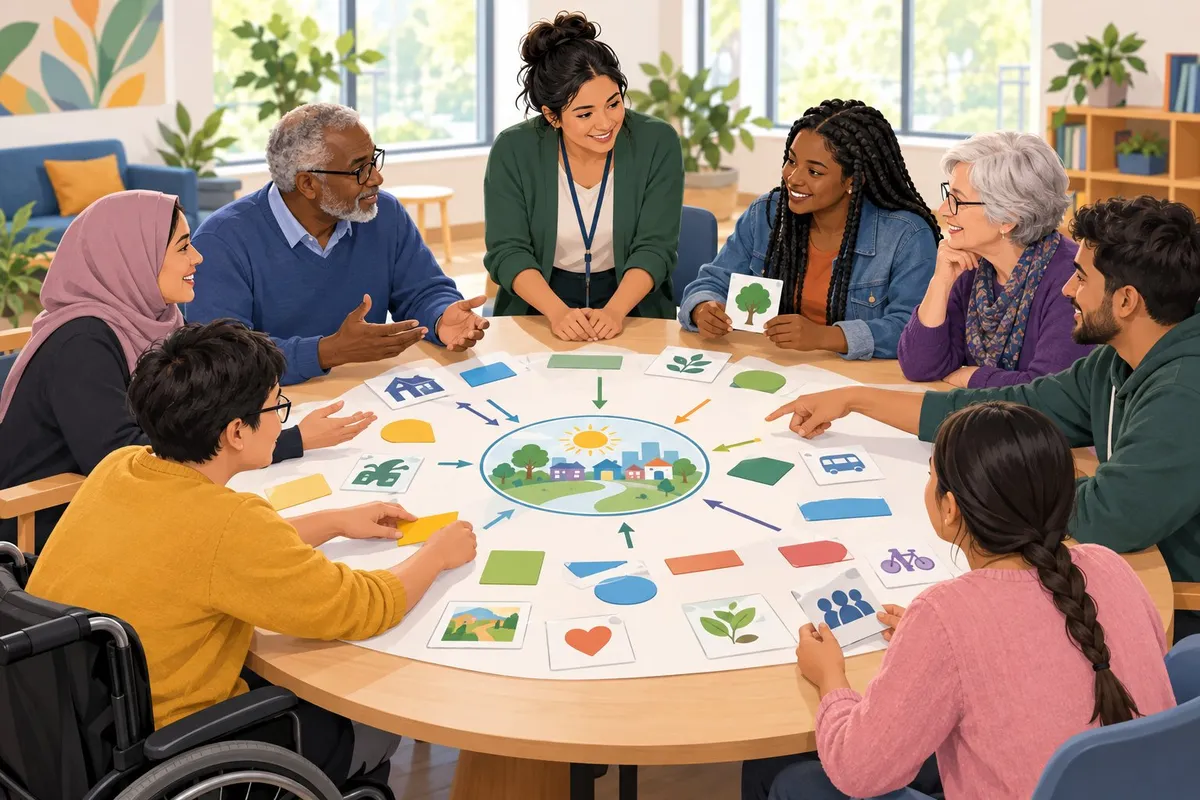
Shared decision-making works best when groups set clear boundaries, build trust before asking for input, and pick methods that match the size and stakes of the decision. The steps below cover how to start, who to involve, and how to check that the process is actually fair.
Identify Unmet Needs and Set Clear Decision Boundaries
Every shared decision-making process starts with a specific question: what decision is actually on the table, and who gets to make it?
Groups should write this down before any meetings happen. Vague goals lead to vague results.
| Question | Why It Matters | Example |
|---|---|---|
| What can community members change? | Sets honest limits on power | Budget allocation, not legal compliance rules |
| Who is affected by this decision? | Identifies who should be at the table | Residents near a new transit line |
| What decision-making method will be used? | Prevents confusion later | Consensus, majority vote, or staff-final-call |
| When does input stop and action start? | Keeps projects moving | A set deadline for feedback rounds |
Groups that skip this step often run into conflict later. Defining roles and limits early, as outlined in guidance on defining roles and responsibilities for all leaders, helps avoid that problem.
Build Trust Through Active Listening and Inclusive Participation
Trust comes before participation, not after it.
People will not share honest input if they think no one is really listening. Active listening means staff and leaders repeat back what they heard, ask follow-up questions, and change plans based on what people say.
Weak version: A city official holds a meeting, takes notes, and never follows up.
Strong version: A city official holds a meeting, sends a summary of what was said, and shows up next month with a plan that reflects that input.
Civic engagement improves when government decisions are not made "without the people who are most affected," according to guidance from Philadelphia's community engagement toolkit. This applies to any group setting, not just government.
Ways to build trust early:
- Host small listening sessions before large public meetings.
- Invite people with lived experience into planning roles, not just feedback roles.
- Share drafts early, even if they are incomplete.
- Credit community members by name when their ideas shape a plan.
Choose Methods for Designing, Funding, and Testing Ideas
Different decisions call for different tools. Picking the right one matters more than picking a popular one.
| Method | Best For | How It Works |
|---|---|---|
| Participatory budgeting | Spending decisions | Residents vote on how public funds get used |
| Citizen science | Data collection and research | Volunteers gather or review data alongside experts |
| Co-design workshops | Service or product design | Small groups sketch and test ideas together |
| Open prototyping platforms | Product ideas | Users submit and vote on concepts, similar to Lego Ideas |
Co-creation methodologies work best when they match the scale of the decision. A small neighborhood project does not need the same process as a citywide policy change.
Community co-design, a method rooted in human-centered design, aims to build structure for shared decision-making rather than one-time feedback, according to a community co-design booklet from Destination Medical Center.
Learn From Product, Civic, and Sustainability Projects
Real examples show how shared decision-making plays out across different fields.
- Product design: Platforms like Lego Ideas let fans submit and vote on new sets, turning customer input into real products.
- Civic planning: Cities use participatory budgeting to let residents decide how to spend part of a public budget.
- Sustainability initiatives: Renewable energy projects often involve local residents in siting decisions for wind or solar installations.
- Environmental policy: Co-creation supports sustainable development by bringing scientists, residents, and officials into the same planning process, as described in an overview of co-creation in environmental decision-making.
These examples share a pattern. Each one moves decision-making power away from a single group and spreads it across the people affected by the outcome.
Sustainability transitions, in particular, depend on this kind of shared input. Communities that help plan energy or land-use changes are more likely to support them long-term, which supports both community resilience and ecological resilience.
Address Unequal Access, Data Risks, and Tokenism
Shared decision-making can fail quietly if these problems go unchecked.
Observation: Only a small, familiar group shows up to every meeting. Decision: The process is not reaching enough people. Action: Add multiple ways to participate, including online forms, phone surveys, and in-person events.
Observation: Community members are invited late, after major decisions are already made. Decision: This creates resistance and distrust, a pattern described in research on late community engagement that created resistance. Action: Bring community members in during early planning, not after plans are finished.
Other risks to watch for:
- Digital divide: Online-only engagement tools exclude people without reliable internet access.
- Digital inclusion gaps: Surveys or apps that are not translated or accessible leave people out.
- Data privacy: Personal information collected during engagement must be stored and shared carefully.
- Algorithmic bias: Tools that sort or rank community input by algorithm can quietly favor certain groups.
- Tokenism: Inviting a few community members to a meeting without giving them real power is not shared decision-making.
Some groups have started testing blockchain technology for transparent voting records in participatory budgeting, though this remains an early-stage practice rather than a standard one.
Measure Outcomes and Support Community-Led Stewardship
Shared decision-making needs a way to check if it actually worked, not just a way to run the meetings.
Groups should track specific results, not general impressions:
| Outcome to Track | How to Measure It |
|---|---|
| Decisions changed by input | Compare draft plans to final plans |
| Participation across groups | Track who attends by neighborhood, age, or background |
| Follow-through on promises | Check if agreed actions were completed |
| Trust over time | Repeat surveys asking if people feel heard |
Joint ownership builds over time when people see their input lead to real change, a point supported by research on maintaining joint ownership across collaborative processes.
The long-term goal is community-led stewardship. This means local groups eventually take on more responsibility for decisions, with outside organizations stepping back into a support role.
A joint decision-making process that distributes power equally among all partners, rather than keeping it with one lead group, supports this shift, according to a methodological guide on decision-making in community-based research. Social equity improves when this handoff happens, because the people most affected by a decision end up holding real power over it, not just a seat at the table.
Frequently asked questions
What does co-creation mean in a community context?
Co-creation in a community means members actively help build content, products, or decisions instead of just consuming what a brand or team produces. It shifts people from an audience role into a contributor role.
A community that practices co-creation might ask members to:
- Submit ideas for new features or products
- Vote on which proposals move forward
- Write guides, reviews, or tutorials for other members
- Moderate discussions or set group norms
- Test early versions of a product and report back
This differs from a community that only collects feedback through surveys. Co-creation involves people in the actual building process, not just the evaluation of a finished product, as described in this overview of community co-creation.
What are the four types of co-creation?
Co-creation typically splits into four categories based on what members help build.
| Type | What members do | Example |
|---|---|---|
| Content co-creation | Write, film, or design material for the group | A member writes a tutorial for a software forum |
| Product co-creation | Suggest or test features before release | A user votes on which app feature ships next |
| Event co-creation | Plan or host group activities | A member organizes a local meetup |
| Governance co-creation | Help set rules or make decisions | A member joins a council that approves new policies |
Each type requires a different level of trust and structure. Content and event co-creation tend to have lower barriers to entry. Product and governance co-creation often need clearer rules about who can participate and how decisions get made.
What is an example of co-creation with a community?
A clear example is a hobby-focused subreddit where members write buying guides together instead of relying on one moderator's post.
Here's how it might unfold:
- A moderator notices the same question gets asked weekly: "What's the best beginner kit for this hobby?"
- The moderator posts a draft guide and asks members to add corrections or missing details in the comments.
- Active members contribute specific model recommendations, price ranges, and common mistakes.
- The moderator updates the guide and credits the contributors by username.
- The community now has a living resource that reflects real member experience, not just one person's opinion.
Other documented examples include LEGO Ideas, where fans submit product concepts and top-rated ones go into production, and open-source software projects, where contributors write and test code together, as noted in this community co-creation glossary.
How can organizations co-create solutions with communities?
Organizations co-create by giving members real input into decisions, not just a feedback form after the fact.
Observation: A product team sees the same complaint repeated across dozens of support tickets and forum posts.
Decision: Instead of fixing it internally and announcing the change, the team opens the problem to the community.
Action: The team posts the issue publicly, asks for proposed solutions, and lets members vote or comment on the options before building anything.
This approach works best when the organization is specific about what's open for input and what isn't. A table like this helps set expectations:
| Open for input | Not open for input |
|---|---|
| Feature priority order | Core pricing structure |
| Naming of a new feature | Legal or compliance requirements |
| Event themes or topics | Platform security decisions |
Organizations that skip this step and ask for broad "ideas" without boundaries often get fewer useful responses, since members aren't sure where their input will actually count. Working as equals on clear terms tends to produce results that stick, according to this description of the co-creation method.
What frameworks support community co-creation?
A few recurring principles show up across organizations that run co-creation well.
- Psychological safety: Members need to feel safe sharing unfinished or unpopular ideas without being mocked or ignored.
- Clear scope: The organization states up front what's open for input, what's fixed, and what happens with the feedback.
- Closed feedback loops: The organization reports back on what changed, what didn't, and why.
- Staged participation: Co-creation starts small, such as a single poll or prompt, before expanding to larger projects.
- Credit and recognition: Contributors get named, badged, or otherwise acknowledged for their work.
Skipping the feedback loop step is a common failure point. If members submit ideas and never hear what happened to them, participation drops off quickly, since the process starts to feel like unpaid labor rather than collaboration, as outlined in this community co-creation guide.
How is community co-creation used in research?
In research settings, co-creation means bringing the people affected by a study directly into its design, not just using them as subjects.
Common applications include:
- Local government projects that invite residents to help design public spaces before construction starts
- Public health studies that involve patients in shaping survey questions or study goals
- Environmental research that includes local advocates or community representatives in setting priorities
- Academic-community partnerships where researchers and community members co-author findings or recommendations
This approach treats community members as active participants with relevant expertise, not passive sources of data. Research co-creation projects often involve residents, users, and other stakeholders working alongside institutions to shape outcomes that reflect local needs, as described in this overview of community co-creation in sustainability contexts.