
Community Referral Program: Building Member-Led Value

Start here: How to Create a Subreddit for Your Business: Find the Gap
TL;DR
- A community referral program rewards people or local organizations for bringing in new customers, instead of giving cash or discounts only to the individual who referred someone.
- The method works because people are more willing to refer others when they know the result helps a school, shelter, or nonprofit they care about.
- Program design requires two decisions: who receives the reward (a specific school, nonprofit, or individual) and how the reward is given (a dollar amount, product, or service).
- Many programs combine a community donation with a small personal reward, such as a discount or gift card, to keep both the referrer and the organization satisfied.
- The next step is choosing a clear reward structure and a simple way to track referrals before launching the program.
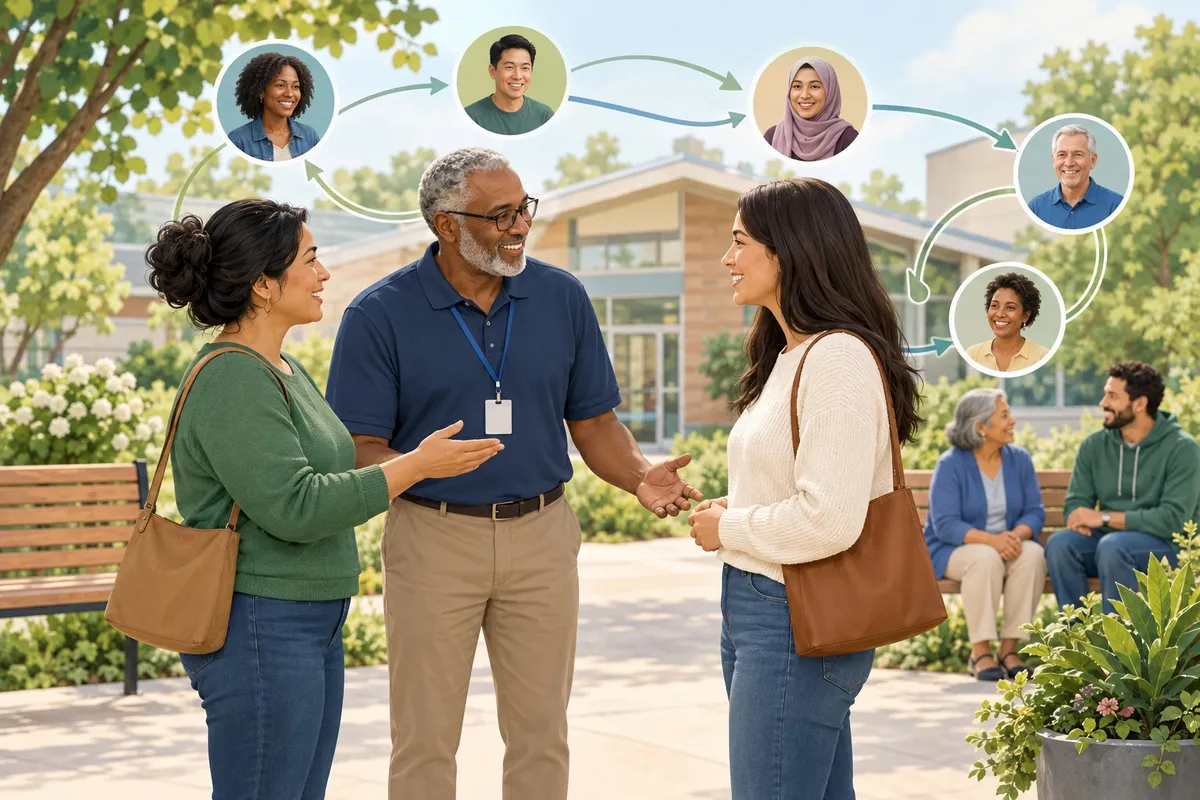
A community referral program ties customer referrals to a cause instead of a cash prize. Instead of handing a gift card to the person who sends a referral, the business donates money, products, or services to a school, nonprofit, or local group. This structure works because many customers are already willing to refer people when it also helps the community.
Businesses that run these programs need to answer two questions early: which organization benefits, and what form the reward takes. A bakery might split bake sale proceeds with a school. A dentist might donate hygiene kits to a shelter for every referral. The options vary by business type, but the mechanics stay the same.
Some programs also reward the referring customer directly, in addition to the community donation. This can include a small cash amount, a discount, or a coupon. The goal is to keep the referral process simple enough that customers understand exactly what happens when they refer someone, and what the result will be for the organization they are supporting.
How Community-Led Referrals Work
A community-led referral program relies on current members to spot people who need help and connect them to resources, instead of waiting for a formal intake process. The model depends on four decisions: how it differs from a standard referral program, how rewards are structured, who gets missed by existing systems, and what actually counts as a completed referral.
What Makes This Different From a Standard Referral Program
A standard referral program usually moves one direction: a provider sends a person to a service, and the case gets logged and closed.
A community-led referral program works more like a web. Neighbors, faith leaders, shop owners, and outreach workers all feed information into the same system, often before a person ever contacts a formal agency.
| Standard referral program | Community-led referral program |
|---|---|
| Starts after a clinical or agency visit | Starts from everyday community contact |
| One referral source per case | Multiple community partners can flag the same person |
| Tracked mainly for compliance | Tracked for both compliance and trust-building |
| Closes when paperwork is filed | Closes when the person's situation improves |
This matters because many people who need support never walk into a clinic or call a hotline. A community referral often starts with someone who already knows the person, not a system that waits for them to ask.
Want the 3-part comment that gets your brand found on Reddit and Google? Get the free Reddit SEO Blueprint
Choosing Between Community Donations and Member Rewards
Programs have to decide what motivates people to keep making referrals: giving back to the community, or rewarding the individual member.
Community donation model:
- Funds or supplies go to a shared resource, such as a food pantry or shelter
- Fits groups where members already see themselves as part of a cause
- Reduces concerns about someone profiting from a neighbor's hardship
Member reward model:
- Gift cards, discounts, or credits go directly to the referring member
- Works well in buyer-advice or local business communities
- Needs clear rules so referrals aren't made just to earn a prize
Most programs pick one model and stay consistent. Mixing both without clear rules confuses members and can create distrust about why a referral was made.
Want the 3-part comment that gets your brand found on Reddit and Google? Get the free Reddit SEO Blueprint
Identifying Needs and People Existing Programs Overlook
Existing referral systems usually look for people who already show up somewhere: a clinic, a shelter intake desk, a police report.
A community-led approach looks for signals outside those systems:
- Watch for repeat informal contact. A shop owner notices the same person asking for help with food or shelter week after week.
- Check who avoids formal systems. Some people avoid 911 or clinics due to past bad experiences or fear of legal trouble.
- Note unmet needs tied to poverty or behavioral health. These often show up as repeated low-level disruptions, not emergencies.
- Record the gap, not just the person. Document what service was missing, so the program can fix the gap for the next person too.
- Result: a list of people and needs that formal intake never would have caught.
This outreach-first approach lines up with how community referrals work as an alternative to police or emergency response for issues rooted in poverty or behavioral health, not crime.
Deciding What Counts as a Qualified Referral
A referral program needs a clear line between "someone mentioned a need" and "a qualified referral was made." Without that line, tracking and rewards fall apart.
| Situation | Qualifies as a referral? | Why |
|---|---|---|
| Member tells a friend about a food pantry | No | No contact info shared, no follow-up possible |
| Member submits a name and need to the program coordinator | Yes | Can be tracked and followed up |
| Member brings someone in person to an intake appointment | Yes | Strongest form, confirms the connection happened |
| Program hears about a need secondhand, with no member attached | No | Can't be credited or verified |
A clear definition protects the program two ways. It keeps reward or donation systems fair, and it keeps data accurate when the group reports results to funders or city partners.
Designing a Program Members Want to Sustain

A referral program lasts when it rewards real contribution, not just invitations, and when members see it as a way of giving back to the community rather than a sales tactic. The following mechanics show how to build a program members want to keep using.
Choosing Local Partners and Meaningful Contributions
Local partners should match what the community already values, not what is easiest to sign up.
| Partner Type | Good Fit For | Watch Out For |
|---|---|---|
| Local business offering discounts | Hobby or neighborhood groups | Deals that expire fast and feel like spam |
| Nonprofit or charity | Groups focused on giving back to the community | Partners with no clear local presence |
| Service provider (gym, shop, studio) | Interest-based communities | Overlap with existing member businesses |
Members stay engaged when rewards connect to something they already care about. A running club that partners with a local shoe store feels different than one that partners with an unrelated national chain. Smaller, local, and visible partners tend to build more trust than big-name ones with no local tie.
Naming and Positioning the Program for the Right Participants
The name of a referral program should tell members exactly who it is for and what it rewards.
Weak version: "Refer a Friend Program" Strong version: "Neighbor Rewards: Bring in Someone Who Will Love This Group"
The weak version sounds transactional. The strong version signals community and belonging, which member referral programs rely on to attract people who actually want to join, not just people chasing a discount.
Positioning should answer three questions clearly:
- Who is this program for? (current members only, or open to anyone)
- What does a good referral look like? (someone who fits the group's purpose)
- Why does this matter? (growing the community, not just adding numbers)
Using Researched Content to Start Substantive Discussions
Referral programs grow faster when they're backed by real data members can discuss and debate.
Observation: Members ask the same questions about how rewards work. Decision: Publish a short FAQ or breakdown with real numbers. Action: Share referral counts, reward payouts, or member growth stats openly.
This kind of transparency gives members something concrete to talk about. A 6-step design process for referral programs works best when each step is explained with specifics, not vague promises. Members trust numbers more than slogans.
Discussion threads that reference actual data, how many referrals converted, what rewards were most popular, tend to last longer than threads built on hype. Members respond to facts they can check.
Inviting Participation Without Treating Reddit as an Ad Channel
Reddit communities notice quickly when a post feels like an advertisement instead of a genuine invitation.
Weak version: "Join our referral program and earn $10 per sign-up! Link below." Strong version: "We built a referral program based on what members asked for. Here's how it works and why we picked these rewards."
The weak version reads as self-promotion and risks removal. The strong version invites discussion and answers questions before they're asked.
Moderators and community leaders should disclose any business relationship behind a referral program openly, not bury it in fine print. This protects trust and keeps the thread from being flagged as spam. Posting less often, but with more useful detail each time, works better than frequent short promotional posts.
Tracking Referrals, Reporting Impact, and Sharing Leadership
Tracking should answer one clear question: did this referral program grow the community in a way members can see?
| What to Track | Why It Matters | How to Report It |
|---|---|---|
| Number of referrals made | Shows program activity | Monthly summary post |
| Conversion to active members | Shows real growth, not just sign-ups | Quarterly update with numbers |
| Top referrers | Identifies natural community leaders | Public recognition thread |
As the program matures, some members will start answering questions about it better than staff do. That's a sign to let them take on informal leadership roles, like running a referral FAQ thread or welcoming new members personally.
Referral programs that work long-term tend to hand off some of this visibility to members themselves. This reduces the need for constant staff posting while keeping the community's trust in the program strong.
Frequently asked questions
How does a community referral program work?
A member shares a unique referral link, a contact earns approval, and a reward posts to an account. That is the full cycle most programs use.
| Step | Action | Who completes it |
|---|---|---|
| 1 | Member gets a unique referral link from their profile | Referring member |
| 2 | Member shares the link through email, social media, or direct message | Referring member |
| 3 | New contact signs up or completes a qualifying action | Referred person |
| 4 | Program reviews the signup for validity | Program administrator |
| 5 | Reward posts to the referring member's account | Program system |
Reward structures vary by organization:
- Points-based systems award a fixed number of points per approved referral, which accumulate toward badges or milestones, as seen in Planview's Community Referral Program, which gives 25 points per approved referral.
- Cash or credit rewards pay a set dollar amount per qualifying referral, such as the Común referral program, which pays $15 to the referrer and $5 to the new account holder.
- Account credit applies the reward directly to a customer's existing balance rather than issuing a separate payment, a method used by Sun Communities' referral program.
- Commission-based rewards pay a percentage or flat fee for each qualified referral that converts into a paying customer, a structure built into PayPal's developer referral program.
Programs also set limits on who can participate and how referrals get disqualified. Self-referrals, duplicate accounts, and fake signups typically void the reward, and most programs reserve the right to remove points or payments if they find misuse.
What are some examples of community referral programs?
Referral programs appear across housing, business software, nonprofit services, and real estate. Each one rewards a different action, based on what the organization needs most.
| Program | Reward type | What triggers the reward |
|---|---|---|
| Sun Communities | Account credit | New resident referral |
| Planview Community Referral Program | Points and badges | Approved community member signup |
| Común | Cash payment | New account plus qualifying transaction |
| PayPal Developer Program | Commission | Qualified merchant referral |
| Zillow Preferred | Success fee paid to Zillow | Closed real estate transaction |
Some programs focus on volume. Planview's system allows unlimited referrals and adds milestone rewards at three and five successful signups. Others, like Zillow Preferred, work in reverse: the partner pays a fee to Zillow after closing a deal, rather than receiving a reward for referring someone in.
Nonprofit and service-based referral efforts work differently from consumer rewards programs. Unite Us connects organizations to strengthen service networks, and the referring party does not receive a cash or credit reward. The benefit comes from stronger service connections across a community.
How do I request a VA community care referral?
A veteran requests VA community care through their VA primary care provider or by contacting their local VA medical facility. The provider determines medical eligibility before the referral moves forward.
- Veteran contacts their VA primary care provider or VA facility.
- Provider reviews the veteran's medical needs and VA care availability.
- Provider determines whether the veteran meets eligibility criteria for community care.
- VA staff generate a referral if the veteran qualifies.
- Veteran receives information on approved community providers.
Eligibility depends on factors set by VA policy, including wait times at VA facilities, distance to the nearest VA location, and whether the needed service is available through VA directly. A veteran does not choose community care on their own; a clinical or administrative review must confirm eligibility first.
Where can I find my VA community care referral and check its status?
A veteran can check referral status through the VA's online patient portal, by phone, or directly with VA staff at their facility. The referral itself gets issued by VA, not by the community provider.
| Method | What it shows | Best for |
|---|---|---|
| VA online patient portal | Referral status, approval date, authorized provider | Veterans who want self-service access |
| VA facility phone line | Verbal status update from staff | Veterans without online access |
| Community care office at VA facility | In-person confirmation and paperwork | Veterans with questions about documentation |
| VA mobile app | Referral tracking tied to patient record | Veterans managing multiple appointments |
A referral status typically moves through stages: submitted, under review, approved, and scheduled. Veterans should confirm their referral shows as "approved" before scheduling an appointment with a community provider, since an appointment booked before approval may not get covered.
How do VA community care referrals and authorizations work?
A referral identifies the need for outside care, and an authorization confirms VA will pay for it. Both documents must exist before a veteran receives treatment from a community provider.
- Referral documents the medical reason for seeking care outside VA facilities.
- Authorization confirms the specific services, provider, and time period VA will cover.
- Approved provider network limits care to providers who have agreed to VA's community care terms.
- Episode of care defines how long an authorization remains valid, often tied to a specific condition or treatment plan.
- Claims submission happens after the appointment, when the community provider bills VA directly for authorized services.
A veteran who sees a community provider without an active authorization risks paying out of pocket. VA does not guarantee payment for care received outside the approved referral and authorization terms, even if the veteran holds VA health benefits generally.
Who can I contact about a VA community care referral or authorization?
A veteran should contact their local VA medical facility's community care office for referral or authorization questions. This office handles scheduling, status updates, and authorization details directly.
| Contact point | Best for |
|---|---|
| Local VA community care office | Referral status, authorization questions, provider list |
| VA primary care provider | Medical eligibility questions |
| VA patient advocate | Unresolved disputes or complaints |
| VA national helpline | General program questions outside facility hours |
Veterans who experience delays or unclear referral status should start with the community care office at their assigned VA facility before escalating to a patient advocate. Facility staff hold direct access to referral records and can correct errors faster than a general helpline.