
Community Value Proposition: Finding Unmet Member Needs

Start here: How to Create a Subreddit for Your Business: Find the Gap
TL;DR
- A community value proposition is the specific benefit a group offers members in exchange for their time, questions, and participation.
- It works only when it solves a real problem for a defined group of people, not when it lists features or benefits in general terms.
- The strongest value propositions come from a transformation: moving members from a problem state to a better one, such as confused to informed or isolated to connected.
- Communities that skip this step often struggle to explain why anyone should join, which shows up as low participation or unclear purpose.
- The next step is identifying what specific group of people is underserved, then building a name, focus, and content plan around their actual needs.

A community without a clear purpose asks a lot of people and gives little back. Members want to know what they get for showing up, asking questions, or sharing their own knowledge. A community value proposition answers that question directly, before anyone has to guess.
This matters whether the community lives on a forum, a Discord server, or a subreddit. The groups that grow are the ones where the benefit is obvious within the first few posts someone reads. The ones that stall usually have a vague mission, a long feature list, or no clear sense of who they're for.
This article breaks down what a community value proposition actually is, why it matters more than a list of perks, and how a group can test whether its value proposition is clear or just assumed.
Define the Promise Members Will Join For
A community value proposition names the specific gain a member receives in exchange for time spent participating. Members decide whether to stay within the first few visits, based on whether the group delivers on what it promised.
What Members Gain in Exchange for Their Time and Participation
Members trade something real, attention, posts, questions, for something they expect back. A clear community value proposition names that exchange directly.
| What the Member Gives | What the Member Expects in Return | Signal It's Working |
|---|---|---|
| Time spent reading threads | Faster answers than a solo search | Fewer repeat questions on the same topic |
| A detailed question or post | A specific, usable answer | Replies that reference personal experience, not guesses |
| Ongoing participation | Recognition from other members | Regulars tagging each other for input |
| Sharing a project or result | Honest feedback | Comments that point out flaws, not just praise |
If the exchange is unclear, members drift. A community value proposition works when it states this trade plainly, not when it lists generic perks like "networking" or "support."
How Belonging and Peer Support Create Distinctive Value
A sense of belonging is what a product or a search engine cannot replicate. This is the part of community value that competitors struggle to copy.
- Recognition: Members remember each other's usernames, projects, and history in the group.
- Peer validation: Advice from someone who has the same problem carries more weight than advice from a company.
- Shared language: Inside jokes, abbreviations, and references signal who belongs.
- Mutual accountability: Members check back on each other's progress, which a one-time forum post does not create.
This matches what sets apart a member value proposition from a generic business pitch: members care about belonging and recognition, not speed or price. A hobby subreddit built around a niche skill, for example, keeps members active mainly because regulars know each other's work, not because the information is unavailable elsewhere.
Why Outcomes Matter More Than a List of Features
A list of features ("weekly threads," "expert AMAs," "resource wiki") describes what a community has. An outcome describes what a member walks away with.
Weak promise: "This group has active discussions and a resource library." Strong promise: "Members fix buying mistakes before they happen because regulars have already made them."
The difference matters because features can be copied by any competing group; outcomes are tied to the specific people already active in the community. Outcomes, not features, are also what separates a strong membership value proposition from a vague one, the promise needs a proof point a visitor can check, such as a thread where a member avoided a costly error because of advice received there.
When outcomes are named clearly, the community value proposition becomes the tool that draws new members in and gives existing ones a reason to keep showing up.
Find, Position, and Test the Community Opportunity
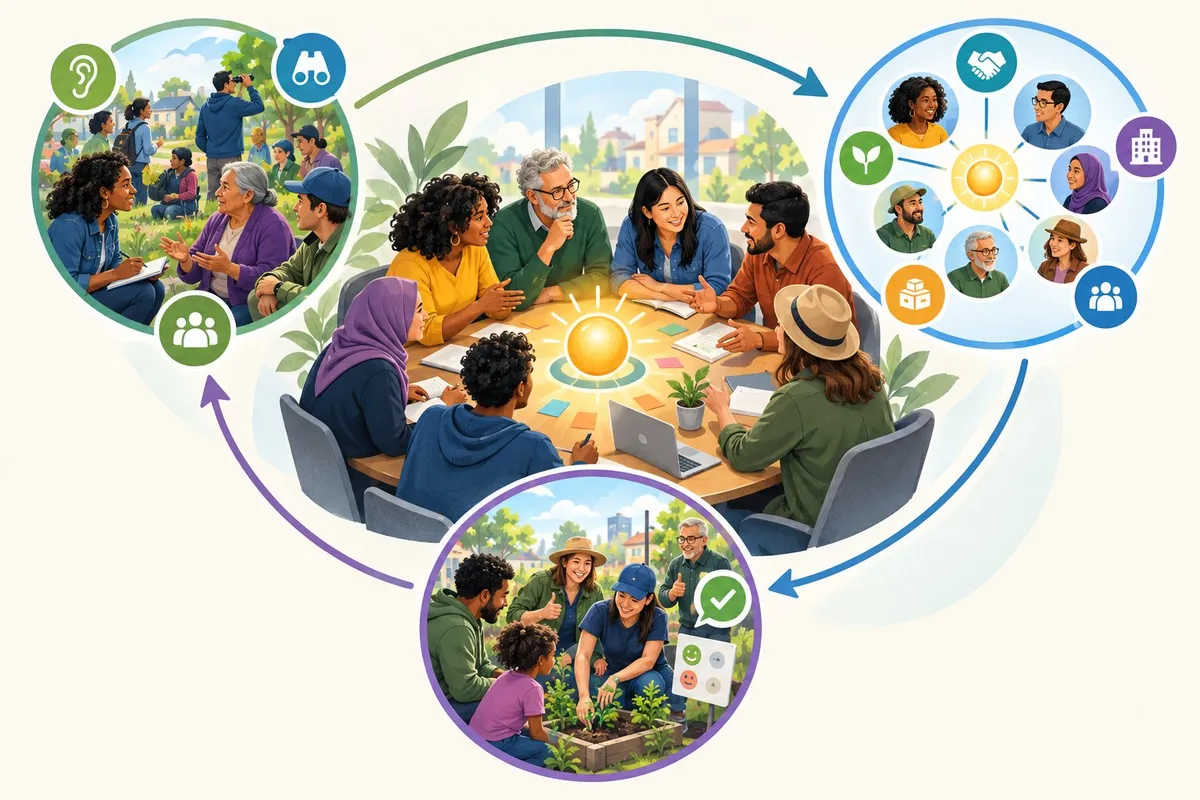
A strong community starts with a gap that no existing group fills well, then proves itself through a name, a set of discussions, and early member behavior. The process below moves from research to positioning to testing, so community builders can confirm demand before investing heavily in growth.
Research Passionate Customers and Gaps Existing Communities Leave Open
Passionate customers already gather somewhere. The work is finding where, and what those existing spaces fail to answer.
| Signal to look for | Where to check it | What it means |
|---|---|---|
| Same question posted weekly | Search bar on a topic subreddit | No pinned resource answers it well |
| Threads with 50+ comments, no clear answer | Sort by top, read top comment | Members want depth the sub can't provide |
| Outdated pinned wiki or FAQ | Sidebar or "About" tab | Resource gap is confirmed, not guessed |
| One member answering most questions | Comment history on recurring threads | A natural leader exists before the community does |
A value proposition only works once this gap is confirmed with real threads, not assumptions.
Map Member Needs with a Value Proposition Canvas
A value proposition canvas forces specifics instead of guesses. It has two halves: what the target audience needs, and what the community offers.
- Jobs: What task is the member trying to finish (buy gear, fix a problem, compare options)?
- Pains: What makes existing communities frustrating (slow answers, bad moderation, outdated advice)?
- Gains: What would make them stay (faster answers, vetted recommendations, direct access to experienced members)?
- Offer: What the new community provides against each pain and gain.
This canvas should be filled out using real thread data gathered during research, not internal opinions about what members "probably" want.
Choose a Name and Positioning That Attract the Right People
Weak name: r/HomeTechTalk, vague, could mean anything. Strong name: r/SmartHomeBudgetBuilds, tells the target audience exactly who belongs and what they'll find.
A name works when a passionate customer reads it once and knows if they're in the right place. Positioning does the same job in the sidebar description and rules.
- State who the community is for, in one line.
- State what makes it different from the larger, general subreddit it splits off from.
- List two or three topics that are always welcome.
- Confirm the name and description match actual thread activity, not aspirational topics.
Done correctly, a stranger can self-select in or out within seconds.
Use Researched Content to Start Substantive Discussions
Generic prompts get generic replies. Research-backed posts get real discussion.
- Comparison threads: Pull specs or pricing from multiple sources before asking which is better.
- Project logs: Document a real build or process step by step, with photos or data.
- Discovery posts: Share a tool, method, or finding and explain why it matters.
- Walkthroughs: Break down how to do something a new member keeps asking about.
A post that cites specific numbers or sources gives members something concrete to react to, correct, or build on. That is what separates a discussion from a comment thread that fades after two replies.
Understand Why Treating Reddit as an Ad Channel Misses the Opportunity
Reddit members read threads for other members' opinions, not brand messaging. A post written like an ad gets flagged, downvoted, or removed by moderators.
Weak approach: "Check out our new product, link in comments." Strong approach: A member of the team answers a recurring question in detail, discloses their role, and lets the product come up naturally if relevant.
This is observed behavior among experienced Reddit moderators and community builders, not a guaranteed ranking factor: communities that tolerate disclosed, useful participation tend to retain trust longer than ones that allow disguised promotion. Business relationships should always be disclosed upfront, not buried in a profile bio.
Align Landing Pages with the Member Experience
Landing pages linked from a community should match the tone and content members already expect. A mismatch breaks trust fast.
| Community promise | Landing page should show | Common mistake |
|---|---|---|
| "Vetted buyer advice" | Comparison data, not a sales page | Page pushes one product only |
| "Beginner-friendly projects" | Step-by-step guides | Page assumes advanced knowledge |
| "Community-tested results" | Member quotes or data, not marketing copy | Page uses generic stock testimonials |
A resource like learn.community can help builders understand how a stated value proposition should carry through to every linked page, so members don't feel misled after clicking through.
Measure Member Outcomes and Make Room for Member Leadership
Growth metrics alone don't confirm a community is working. Outcomes do.
Observation → Decision → Action
- Observation: A member writes a better FAQ answer than the pinned one. → Decision: The community needs to formalize contributor input. → Action: Add them as a wiki editor or flair them as a trusted contributor.
- Observation: Members start answering each other before staff respond. → Decision: Staff posting frequency can decrease. → Action: Shift staff role toward moderation and quality control only.
- Observation: A recurring thread type gets consistently high-quality replies. → Decision: This topic deserves a permanent resource. → Action: Pin it or add it to the sidebar.
This shift marks the move from staff-led content to member-led growth, where community members increasingly guide discussion topics and quality standards, while moderation still protects the space from spam and bad-faith posts.
Frequently asked questions
How do you write a compelling value proposition for a community?
A compelling value proposition names the specific transformation a member gets, not the features a community offers.
- List what a member can do, feel, or achieve after joining that they could not do before.
- Cut any line that describes a feature instead of an outcome (drop "weekly calls," keep "faster answers to technical questions").
- Write one sentence that states the starting point and the ending point for the member.
- Test the sentence against a real question: would someone searching for this outcome recognize this group as the answer?
- The result is a short statement a reader can repeat back after reading it once.
| Weak version | Strong version |
|---|---|
| "We host 7 live workshops a month" | "Go from stuck on your first project to shipping it with daily feedback" |
| "Members-only discount on our shop" | "Stop overpaying for gear by getting real prices from people who own it" |
| "30 videos in our knowledge base" | "Learn the skill in weeks instead of teaching yourself for years" |
This process matches how a community value proposition promises a result, not a list of parts.
What should a community value proposition include?
A community value proposition includes three parts: the starting point, the ending point, and the group of people it's for.
| Part | What it answers | Example |
|---|---|---|
| Starting point | Where is the member now? | New to woodworking, no shop space |
| Ending point | Where do they end up? | Finished first project with confidence |
| Audience | Who is this for? | Hobbyists working in small apartments |
Observation: a value proposition that lists five or more benefits confuses readers instead of convincing them. Decision: cut it down to one clear transformation. Action: write one sentence, test it on three people outside the community, and ask what they think the group does.
This lines up with the finding that a successful value proposition should be short, clear, and built around one transformation.
What are some examples of effective community value propositions?
| Kind of community | Value proposition | Who it's for |
|---|---|---|
| Local buyer-advice subreddit | "Find a trustworthy contractor without getting scammed" | Homeowners starting a renovation |
| Professional trade subreddit | "Get a second opinion from working engineers before you sign off" | Engineers facing an unusual job |
| Hobby subreddit (woodworking) | "Turn scrap lumber into your first real project" | Beginners with basic tools |
| Membership community for creators | "Go from posting alone to getting real feedback every week" | Creators stuck without an audience |
Each example follows the pattern of moving someone from one state to another, which matches the finding that community value should be framed as a transformation, not a feature list.
A grant-focused version of this same idea shows up in nonprofit work, where a value proposition explains why people and funders should support an organization.
Is there a template for creating a community value proposition?
For [specific audience],
who currently [struggle with / lack / want],
[community name] helps them [specific outcome]
by [one core method], unlike [alternative they're using now].
Example filled in:
For first-time dog owners,
who currently get conflicting advice from random forums,
PupStart helps them train their dog with confidence
by connecting them with certified trainers who answer questions daily,
unlike generic pet forums where answers go unchecked.
Steps to protect this template once it's written:
- Post it where new members land first, such as the community description or welcome message.
- Check new posts against it; if a thread doesn't fit the promise, it's a sign the scope is drifting.
- Update the wording when member questions start pointing to a different outcome than the one written down.
- Avoid adding extra bonuses to the template just to make it sound bigger; it makes the core promise harder to see.
How does a community value proposition differ from a brand value proposition?
| Brand value proposition | Community value proposition | |
|---|---|---|
| Who delivers the value | The company | Other members, mostly |
| What's being promised | A product or service outcome | A shared experience, outcome, or transformation |
| Who proves it's true | The company's claims | Member stories, threads, and repeated results |
| Risk if broken | Refund requests, reviews | Members leave and the group goes quiet |
A brand value proposition is a one-way promise from a company to a buyer. A community value proposition depends on other members showing up and delivering on it too, which is why trust between members is described as central to a convincing community value proposition.
In a corner built around passionate customers, the value proposition works only if members answer each other's questions well; a brand can't fake that by writing better copy.
How can you tell whether a community value proposition resonates with members?
Observation → decision → action:
| What the reader sees | What it means | What to do |
|---|---|---|
| New members repeat the value proposition in their own words in intro posts | The promise is clear and remembered | Keep the wording as-is |
| Members ask questions that don't match the stated promise | The value proposition is too broad or unclear | Narrow the wording to match what members actually want |
| Threads about the core transformation get the most replies and saves | The promise matches real demand | Feature these threads, link them in resources |
| Members stop mentioning the stated goal after a few weeks | The promise isn't being delivered | Check if moderation or content is drifting away from it |
| Long-time members can explain the value proposition to a newcomer without prompting | The promise has become self-sustaining | This is a sign the Shift to Member-Led Growth is underway |
Tracking whether members hit the promised transformation, not how often they post, is the clearer signal; one practitioner frames this as treating transformation as the key metric of success instead of raw activity.